Introduction
Tengchong is a small western Yunnan border city with volcanic landscapes, geothermal water, an overseas-Chinese trading heritage and a substantial wartime history. Its appeal lies in both the landscape and the lives that have developed here.
You could stay ten days and still find more to explore. We suggest starting with four themes: old-town life, volcanic landforms, wartime history and hot springs. Its trading position brought prosperity; its geological past left volcanic craters and vast formations of columnar basalt. Its modern history connects resistance, expeditionary campaigns and the counteroffensive against Japan.
Bring what you need for a soak: a hot spring can be a pleasant end to a day out. The sections below cover accommodation, experiences, food and other places to visit.
01 Places to stay
Outside the busiest seasons, when prices can rise sharply, we favour a good hot-spring hotel. An evening soak at your accommodation saves a separate journey.
Our recommended properties are places Zhengfei has tried and selected for value in their category. Choose dates and a room type on Trip.com/Ctrip, then send us the quoted price to ask about our partner rate.
Dujuan Wang Hot Spring Hotel (杜鹃王温泉酒店): good value, spacious rooms and large soaking pools in private courtyards.
Shiguang Jiyi Rehai sulphur-spring guesthouse (拾光记忆热海硫磺温泉私汤民宿): serviced-apartment-style accommodation with water supplied from Rehai, facilities and airport/shuttle services.
Yueshanshui Hot Spring Resort (腾冲悦山水温泉度假酒店): particularly suitable for drivers, with home-like rooms and good appliances. Options include suites, higher-floor rooms without springs, and detached villas with private soaking pools; choose the room category carefully.
Heshun Old Town: we generally prefer another base if you will be coming and going often, because vehicles cannot drive through the town. If staying here, choose accommodation near a car park and, ideally, renovated within the last three years. The road between Heshun and the city, passing the national cemetery, can become very congested on holidays. The guide also cautions that Heshun itself has no natural hot springs, so check what a property's advertised pool actually uses.
City hotels: good value and relatively convenient transport. A standard hotel is a useful choice if you plan to try different springs outside town. Our guide recommends Jinyue Hotel (锦悦酒店).
02 Four ways into Tengchong
Old-town life on the border
Heshun: an admission-charging old town, but worth considering for its prosperous past and slower rhythm. An autumn or winter evening boat ride, with waterbirds and sunset, is a particular favourite. Ask about Zhengfei's Heshun walking handbook through our miniapp.
Qiluo: modern and old buildings sit together, so it is less uniformly photogenic than a restored visitor town. Its morning market, temples, old library and exhibition spaces reward a relaxed wander. Our miniapp also has information about the Qiluo handbook.
Volcanic landscapes
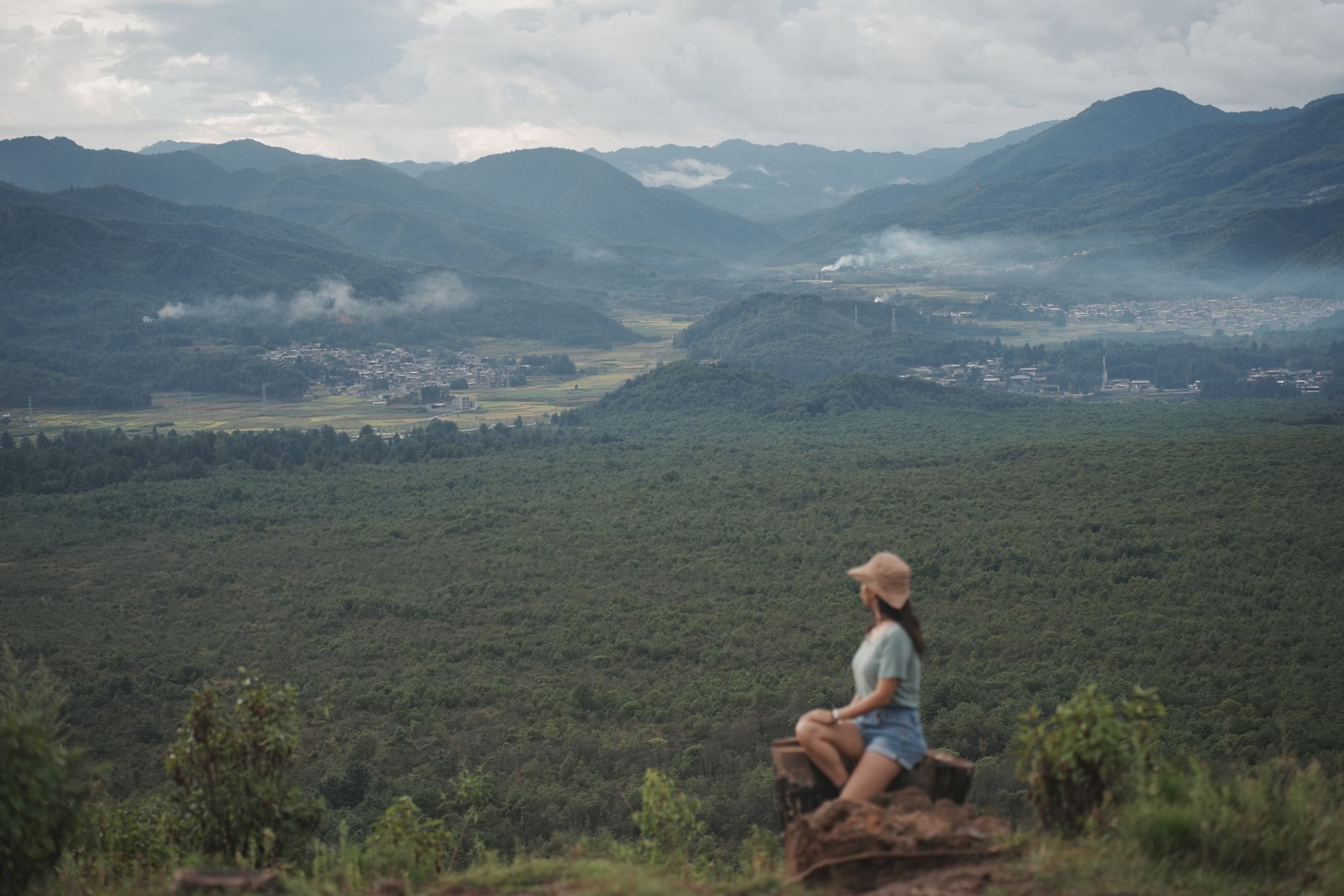
Tengchong's well-preserved volcanic terrain deserves more than a quick stop at Rehai. Give its craters and columnar basalt time of their own.
Volcano Geopark: the museum is useful for understanding eruptions and changes in the earth's crust. Some visitors find the climb up Dakong Mountain hot, tiring and visually underwhelming. Our team's visits suggest early morning or late afternoon gives much better light than noon. The guide quotes a short, early-morning balloon ride at CNY300 for roughly seven minutes; confirm current arrangements before deciding.
For a self-drive trip, ask Zhengfei about our alternative volcanic-landscape guide, including free viewpoints and less familiar ways to explore.
Our volcano and waterfall walk visits a volcano and landscapes shaped by water cutting through columnar rock, followed by food at an outdoor kitchen.
Wartime history
National Cemetery and Western Yunnan War of Resistance Museum: key places for understanding Tengchong. Japan invaded Burma in 1942, threatening the Burma Road, an essential supply route through Dehong, Baoshan and Tengchong. China's alliance with Britain brought an expeditionary force of around 100,000 into Burma, but Japanese advances continued through Wanding, Mangshi and Longling, with Baoshan bombed and territory west of the Nujiang occupied.
The 1944 counteroffensive recovered Tengchong, remembered as China's first county town liberated in the campaign, while supporting the fighting in India and Burma. These campaigns became part of the wider Allied victory, China's postwar international position and the momentum of the resistance at home.
Songshan battlefield memorial park: in Longling, roughly an hour and a half from Tengchong and an hour from Mangshi according to the guide. Preserved trenches and passages help you understand the battlefield; sculptures of the expeditionary forces, including child soldiers, are especially moving.
Zhengfei's Tengchong wartime-history day connects the cemetery and museum with Mangbang, where the local campaign's opening and final fighting are remembered. It explores trenches, local stories and, when possible, encounters with surviving veterans.
Hot springs
Tengchong is often described as having 99 volcanoes and 88 hot springs. Options range from village bathhouses to expensive private suites. These are some distinctive choices rather than a complete list of standard resorts.
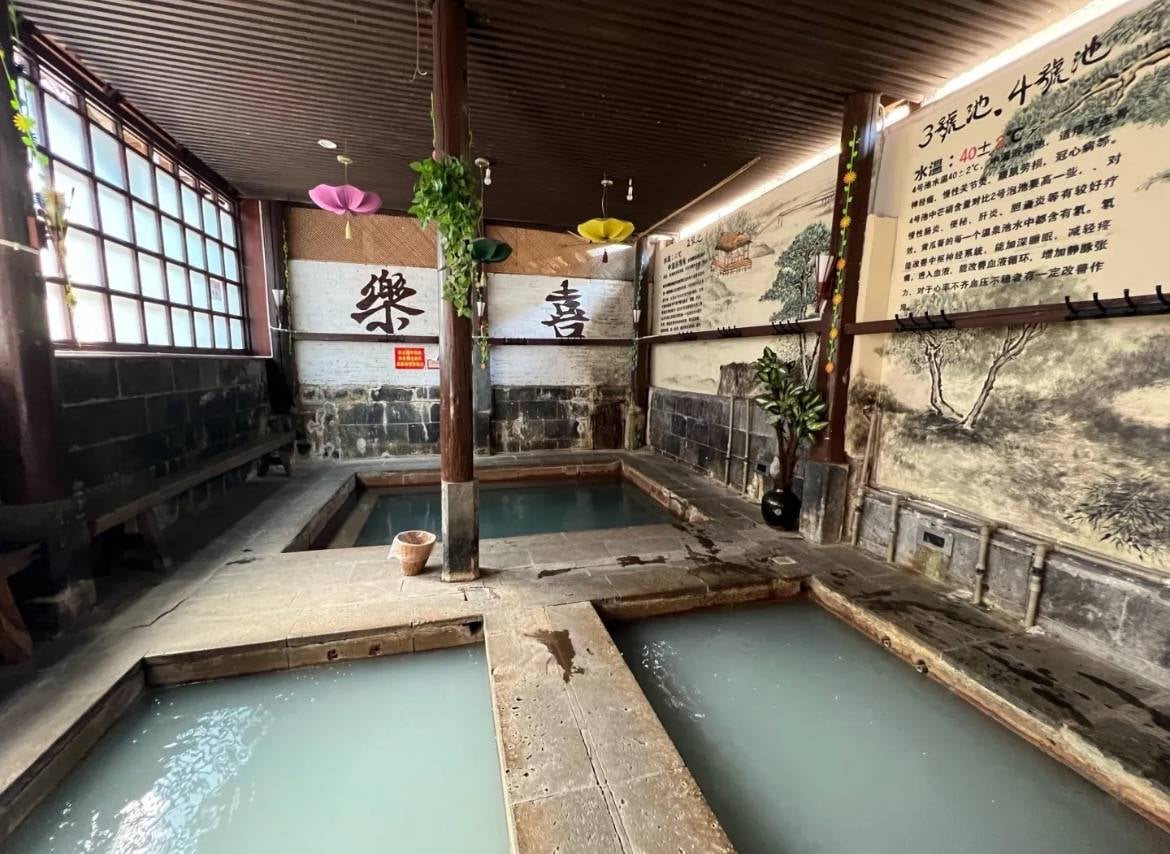
Huangguaqing Waipo Jia (黄瓜箐外婆家): a long-used sulphur spring associated locally with water upstream of Rehai. Zhengfei spent several days here with a Bilibili documentary team and met repeat visitors from Guangdong and Fujian. We enjoyed the water, but the ageing facilities and mineral deposits divide opinion. Our guide recommends visiting for a soak rather than staying overnight.
Yongle springs: dozens of establishments along National Highway 219. Dongshan has developed into a modern resort village, while Hexie Ping'an bathhouse (和谐平安澡堂) is an affordable local bathhouse with good water.
Hehua springs: a standard resort, with an added reason to visit nearby Xianduo village (羡多村). Egrets gather here, particularly in the early morning, evening and rain—a quieter stop our ecology-focused team enjoys recommending.
03 Eating in Tengchong
Compared with neighbouring Mangshi, we find Tengchong's food choices less varied. This list comes from repeated recommendations and meals with Zhengfei's team.
Mingjie Snacks (明杰小吃): a simple small restaurant; shredded potato with beef, chilli-oil yellow-throat and twice-cooked pork are especially good with rice.
Shiweitian Sichuan Restaurant (食为天川菜): a sociable owner, tender dry-fried green beans, and good boiled beef and maoxuewang.
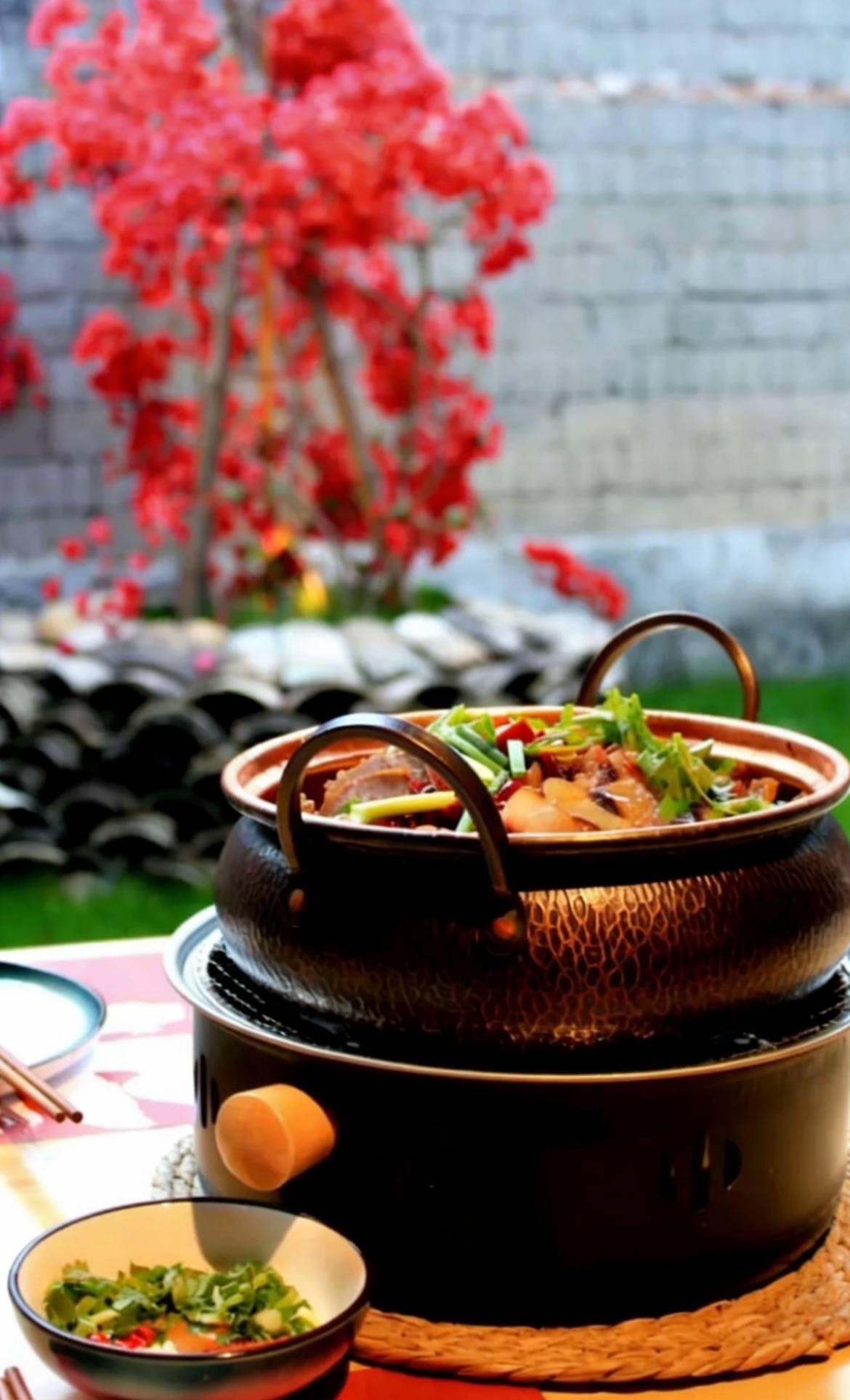
Niu Guo copper-pot beef (牛锅·铜瓢牛肉): in Heshun's Huangguoshu Lane, diagonally opposite Chihe guesthouse. Our guests particularly enjoy its tender stewed beef after a day out.
Jinshan Potstickers, Haihua Road (金山锅贴): a long-established local restaurant, with fresh ingredients, sweet-sour dipping sauce and recommended pork and beef skewers.
Yingchun Restaurant / Haishao Fish Restaurant (映春餐厅海稍鱼庄): in a lane in Guanyintang community. A good stop for fish lovers; our guide recommends its catfish.
Qiu Jie Hotpot (秋姐火锅): Chongqing-style broth, fresh ingredients, chicken feet and tripe. Check the available group-buying offer, which the team has found better value than paying directly.
Other suggestions: Liu Ji traditional hearth chicken, Century City (刘记老火塘土鸡); Ma Dong halal copper-pot beef, first branch (马东清真铜瓢牛肉馆); and Lao He halal restaurant in Qushi (老何清真食馆).
04 Other places to visit
These are our team's personal impressions, intended to help you choose among Tengchong's many sights.
Beihai Wetland: a volcanic dammed-lake wetland with floating mats formed by the intertwined roots and stems of aquatic plants, described in the guide as one to two metres thick. Nature lovers may enjoy the scenery and a boat trip among the mats. Winter is a good birdwatching season; the guide records 222 bird species. Worth considering when you have enough time.
Ginkgo villages: Gudong's famous ginkgo village becomes very crowded during the leaf season, but is pleasant outside it. For autumn colour, the guide also suggests Xiaoyutang village in Qushi, with free access and an older ginkgo landscape.
Rehai: known for geothermal sights such as the Big Boiling Pot and Toad Mouth. Our team finds the brief novelty less compelling than other landscapes, particularly amid peak-season crowds. Cooking eggs in hot water is a famous feature, though other Yunnan springs offer similar experiences.
Local recommendations from Zhengfei. Confirm opening times, rates and availability for your travel dates.