Introduction
The Gaoligong Mountains and Nujiang divide the Baoshan region. To the west, relaxed Tengchong is an old trading town with an overseas-Chinese heritage—Tengchong is administratively part of Baoshan.
Baoshan city was once called Yongchang, an important stop on the southwestern Silk Road, also known as the Shu–Shendu route. Migration from central China grew from the Ming period, including many families from Nanjing's Yingtianfu. The guide notes a modern air connection with Nanjing as an interesting echo of those older ties.
The area guarded routes across the Gaoligong Mountains and Nujiang and became central to the wartime defence against Japanese forces advancing from Burma, the expeditionary campaigns and the counteroffensive. Those events connect local history with China's wider wartime and postwar story.
Only traces of the old city walls survive on Taibao Mountain, but changing buildings have not erased local traditions. The following four sections begin with where to stay, then explore experiences, food and other places to visit.
01 Places to stay
First choose your area carefully. Coffee estates and the Nujiang valley are around Lujiangba, at least an hour from central Baoshan; some scenic hotels take more than two hours to reach. City hotels and valley accommodation serve different trips. Contact Zhengfei about partner booking rates.
Baoshan city
Business hotels around Qinghua Lake offer good value and generally reliable service. A room facing the lake can give broad views without a high-end resort price.
Lujiangba
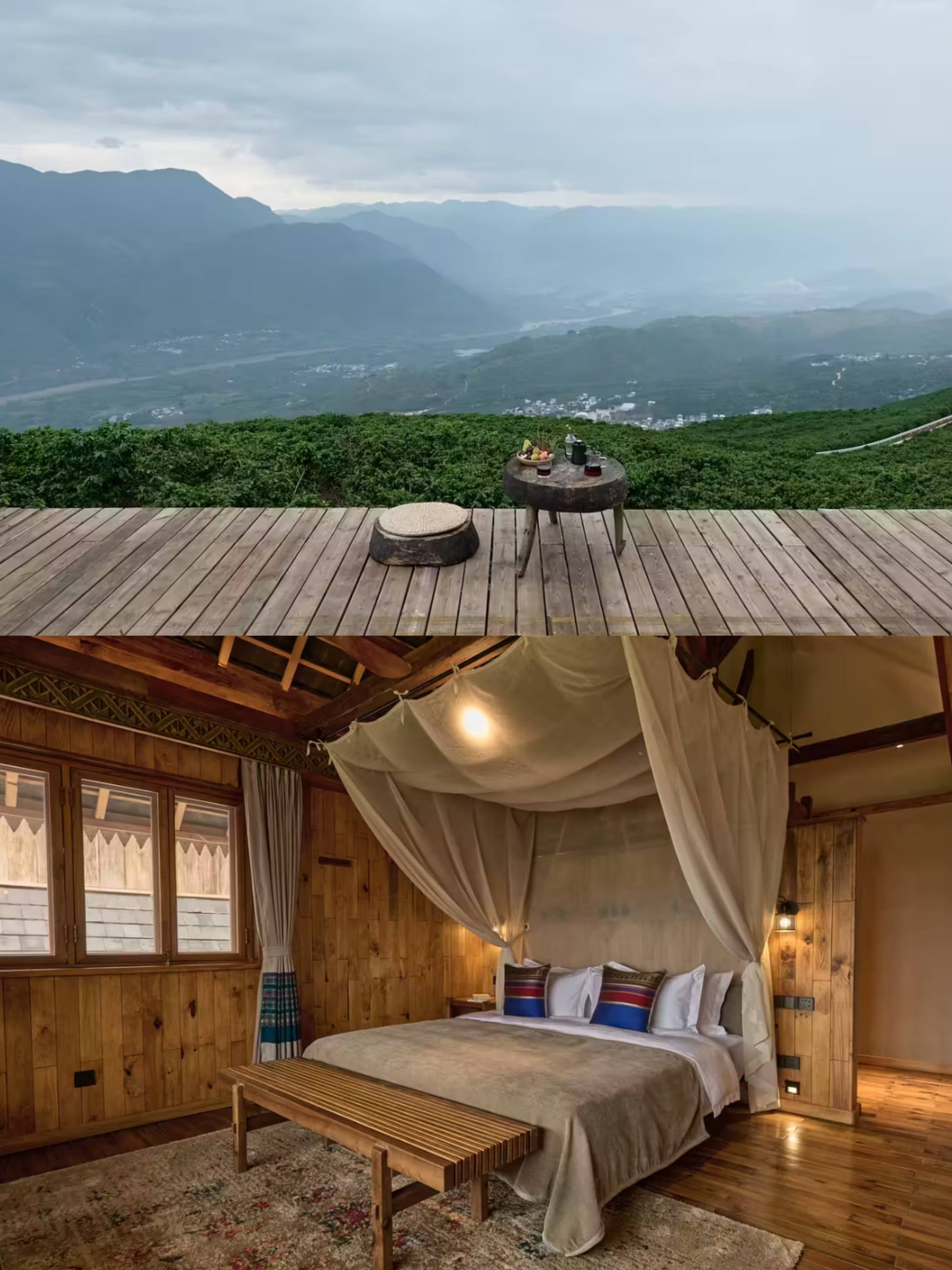
Huke Coffee Estate (乎壳咖啡庄园) — five stars in our team's recommendations: especially appealing for couples. On the Gaoligong hillside, it overlooks the Nujiang and the farmland of Lujiangba, with coffee fields outside and coffee available throughout your stay. You can also drive up simply for a drink. Prices are relatively high; after Xinzhai village, slow down on bends and use your horn where visibility is limited.
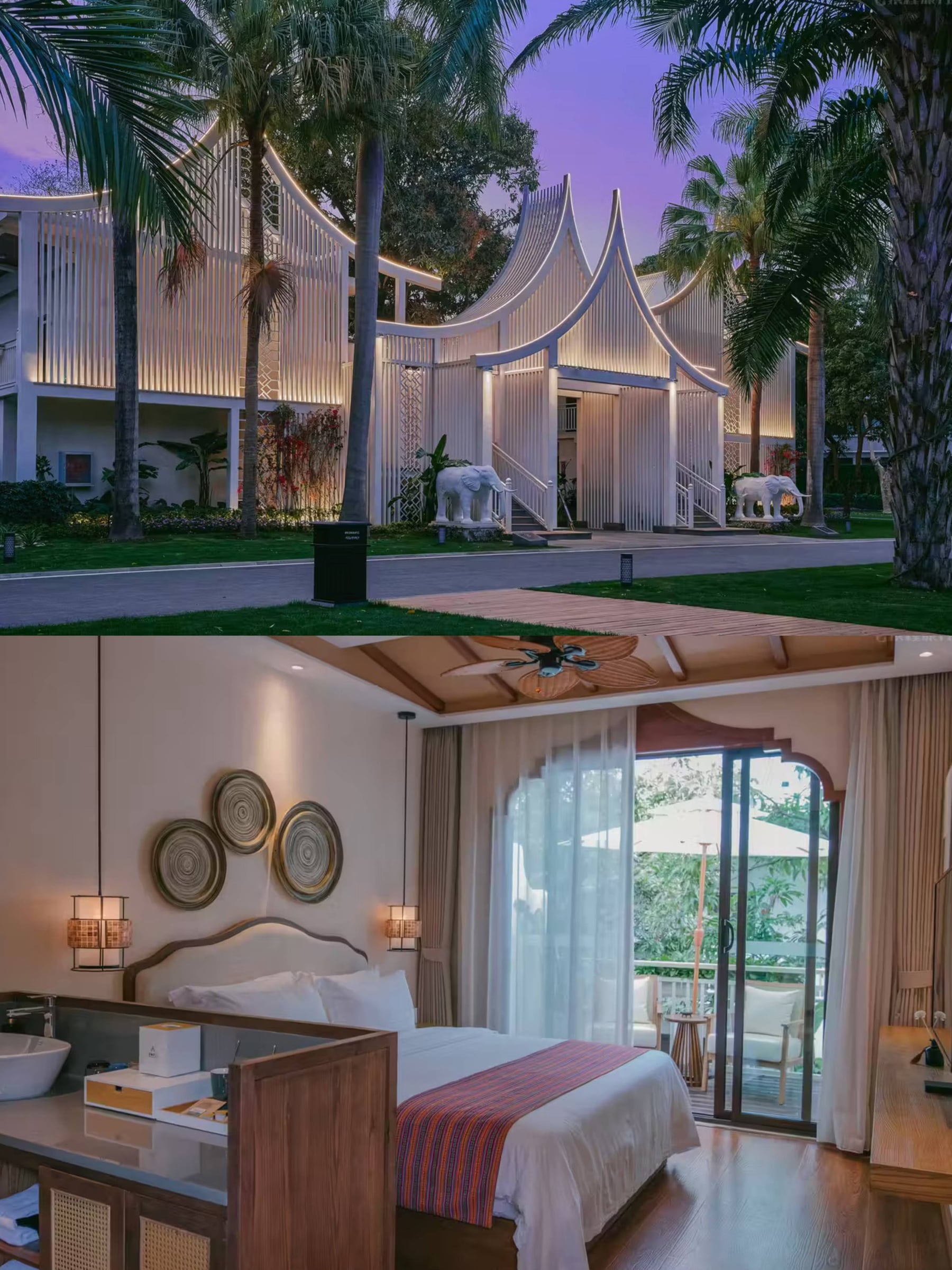
Menghe Hotel (孟赫酒店) — four stars: a family option in Menghe town, with resort facilities and a small amusement area. It is relatively far from Baihualing, Shuanghong Bridge and other central Lujiangba sights, though useful for guests joining Zhengfei's Skywalker gibbon habitat activity.
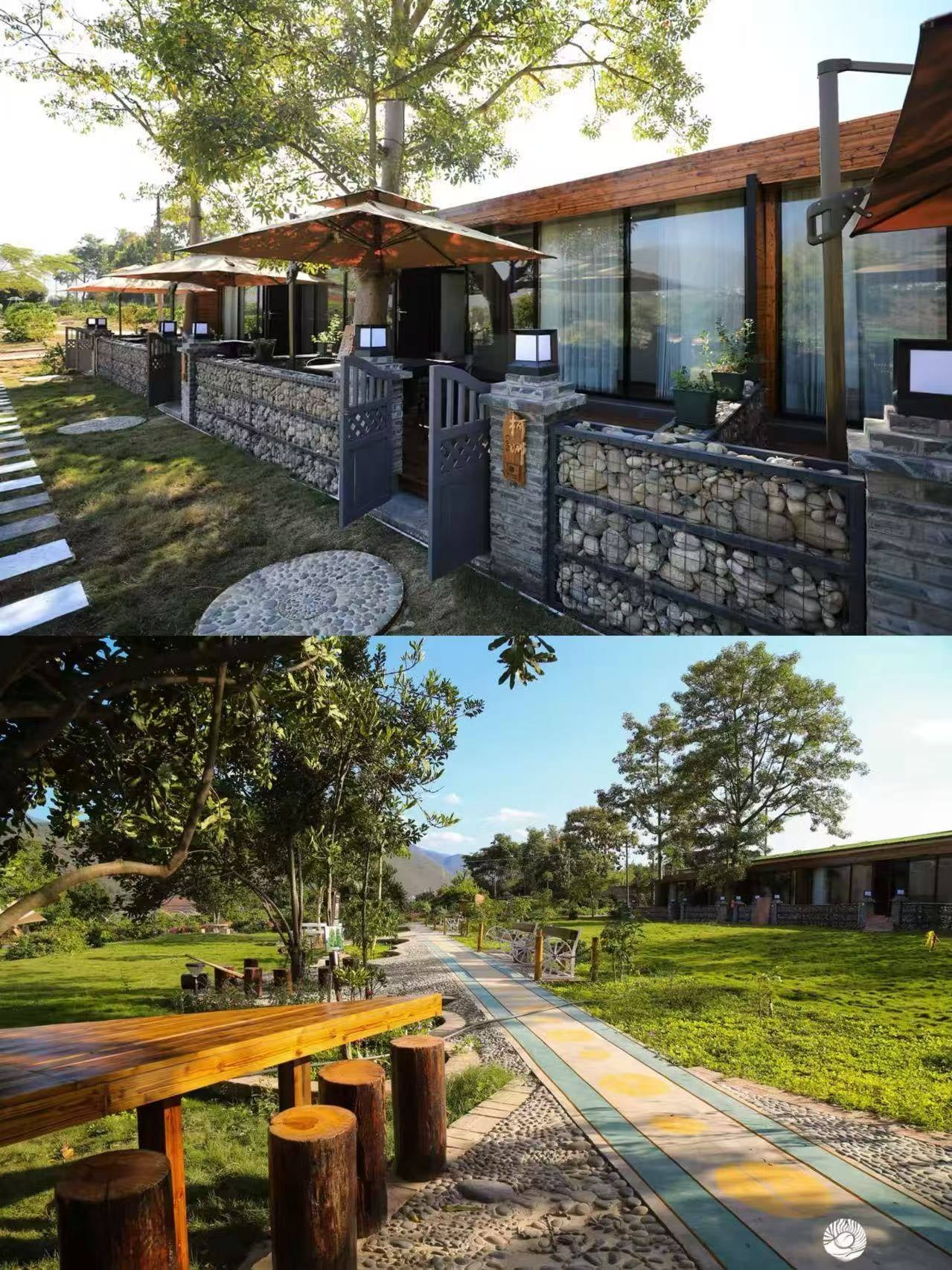
Biton Coffee Estate (比顿咖啡庄园) — three stars: convenient access and reasonable value, an established estate with coffee experiences and an orchard. An evening insect walk in the garden can be fun. Its activities cater more to groups than individual visitors, so daytime noise and the quality of the coffee experience may not suit everyone.
02 Places that open up local stories
Bajie Temple and Reclining Buddha Temple
Local tradition associates Bajie Temple with Gao Village, where Zhu Bajie marries in Journey to the West. The interesting question is how that story took shape here.
Our local account connects the legend with seasonal floods and debris flows below the mountains. Fields disturbed by mud resembled ground rooted up by pigs, giving rise to stories of a pig deity. Before the rainy season, around the beginning of summer, villagers prayed beside the river for protection from disaster.
Migration from the Ming period may have carried these stories back towards central China. Whether they influenced Wu Cheng'en's novel is uncertain. In the local telling, the novel's Zhu Bajie later returned through shared stories and became connected with the temple and surrounding landscape.
About a kilometre away, a cave at Reclining Buddha Temple is linked to Zhu Bajie's birth in local legend. The large banyans at Bajie Temple have their own meanings too; exploring them is part of a visit.
Qinglong Old Street
Banqiao is described in the guide as an old town dating back more than 1,800 years, an important stop on the Yongchang route of the ancient southern Silk Road.
Qinglong Street, established in the Ming Hongwu period, was remembered as a major western Yunnan market. Xu Xiake described Banqiao as an important thoroughfare, and much of the street pattern survives. The Qing-period Kuixing Pavilion at the south end was funded by local donations.
The street is now a heritage-and-crafts district, but many homes still have a shop at the front and living quarters behind. Look for Sibaozhai (四宝斋) and its black-copper silver-inlay craft. Food options include mixed rice with meat sauce, roast-pork rice noodles, jiangjiao dumplings, fried lotus root and fresh papaya drink. Ask Zhengfei about the papaya-drink shop that jokingly calls its drink Baoshan's “Lafite”.
Guixianglou (桂香楼) and Zhilanxuan (芝兰轩) are old shops for traditional Banqiao pastries. The lived-in street also offers chances for conversation: the guide describes an old teahouse charging CNY3 for a pot, and shops whose owners' collections feel like small private museums.
03 Eating in Baoshan
These are the restaurants recommended in our Baoshan guide.
Xiacun original-flavour steamed beef (下村清蒸原味牛肉馆): fragrant, thick-cut beef and a moderately spicy broth. The team particularly recommends cold-sliced beef. Because it uses charcoal, choose a window-side seat.
Niu Shaoye barbecue, Xuefu Road (牛少爷烧烤): the guide recommends the beef with dipping sauce, including its raw-beef dish. The setting and ingredients receive good comments; call about the queue before going.
A Xiang barbecue, Jiulong Road (阿香烧烤): a long-standing Baoshan favourite with spicy-marinated skewers. Beef skewers are generous and juicy. Like Niu Shaoye, it can involve a queue; allow around two hours for the meal rather than fitting it between tight plans.
Hump Wild Mushroom King, Jiulong Road (驼峰野菌王): a mushroom restaurant established for around twenty years. The team recommends mushroom hotpot and fried rice, particularly during the rainy mushroom season. Try the developing flavour of the broth and ganba-mushroom fried rice.
Xinyue homestyle huoshaorou (新月家常菜火烧肉): opposite Baoshan coach station, with a considerate owner, generous portions and quick service. The guide quotes around CNY30 a person; try roast pork and beef stir-fried with celery.
04 Other places to visit
These are the team's personal suggestions for choosing among local sights.
Jinji and Yude
About three kilometres from Banqiao, Jinji is associated in local tradition with descendants of Lü Buwei. What is described as the old Buwei city site is now farmland. Older buildings cluster around Sifang Street; the Jinji theatre is particularly distinctive. Opposite it, Jinji Primary School served as the wartime headquarters of Song Xilian's Eleventh Army Group.
North of Jinji, Yude village has a pottery tradition, with factories that can be visited. It also has a Yongzi culture park, where a workshop demonstrates the making of the distinctive Go stones.
Taibao Mountain Park
On the west side of the city, Taibao Mountain is a good place for a walk and broad views over Baoshan.
On the way up through woodland, look for the Ming-period Jade Emperor Pavilion. Twelve large characters on its upper level offer an observation challenge: from the front, left and right, they read 至诚无忌, 龙飞凤舞 and 海晏河清.
Continue through the Songshan Yuanci gateway to the summit, where part of Baoshan's old wall survives. The viewing tower looks across the city. On the western side is the Wuhou Shrine, established in the Ming Jiajing period, with old trees and a painted clay image of Zhuge Liang.
If time allows, take the road down from the car park beside the shrine to Yiluo Pond. Trees surround the water, with Zhuoying Pavilion in the pond and Wenbi Pagoda opposite. A Western Yunnan war memorial honours those who died in the campaign.
Lihuawu
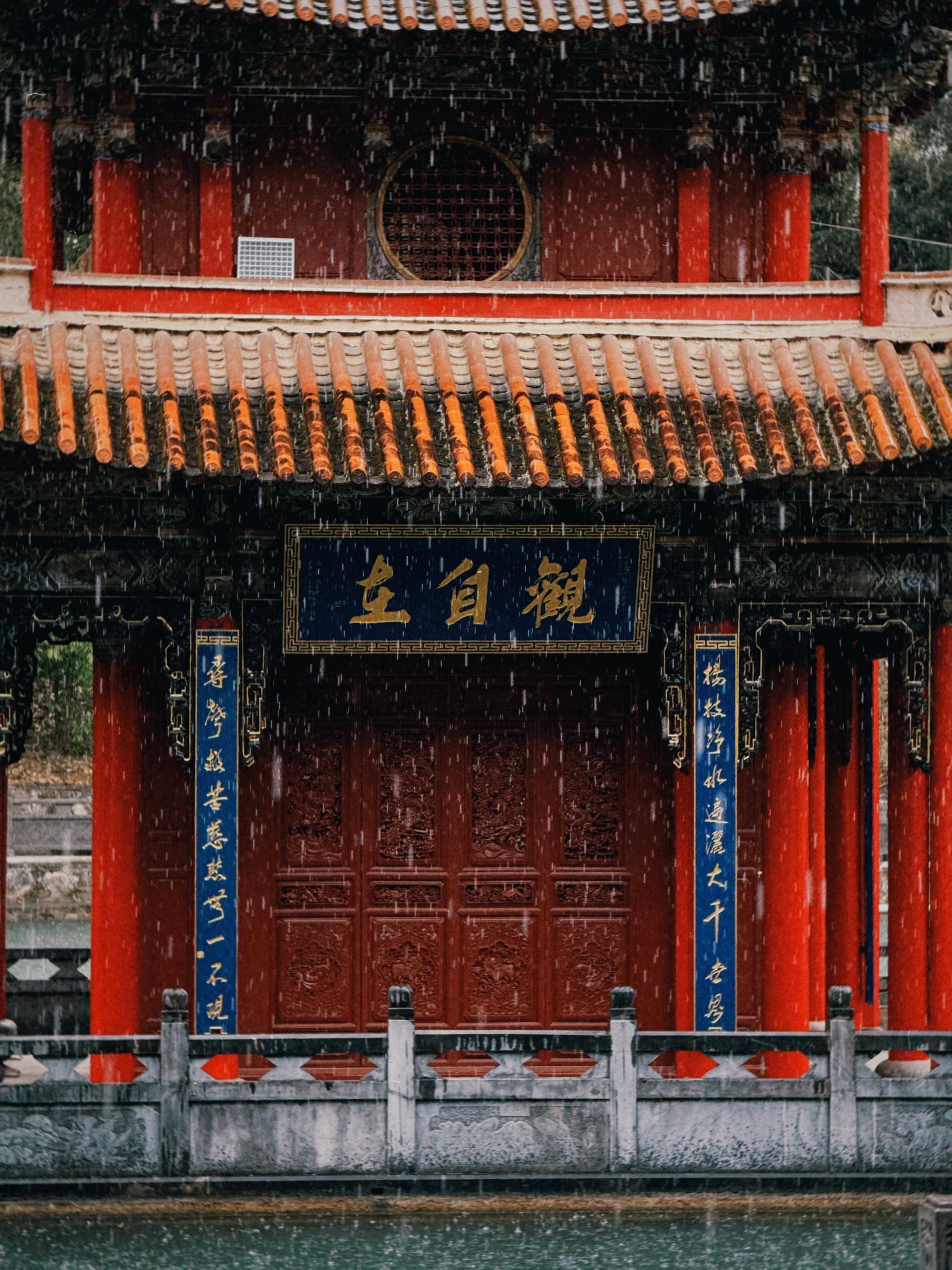
Below Jiulonggang southwest of the city, Lihuawu combines pear trees with the hillside Ciyun Temple. Its main pavilion honours Guanyin, with towers, reading rooms, ponds and smaller pavilions arranged around it.
The guide lists Guanyin gatherings on the twenty-ninth day of the second lunar month and the nineteenth days of the sixth and ninth lunar months. Spring pear blossom adds another reason to visit. The temple's vegetarian food is recommended too.
Local recommendations from Zhengfei. Confirm opening times, rates and availability for your travel dates.